LIV Golf is insolvent. Was the attack on the PGA Tour a success nonetheless?
More than five billion dollars, two major wins, one bankruptcy filing: the story of LIV Golf in five acts and what the golf industry can learn from it.
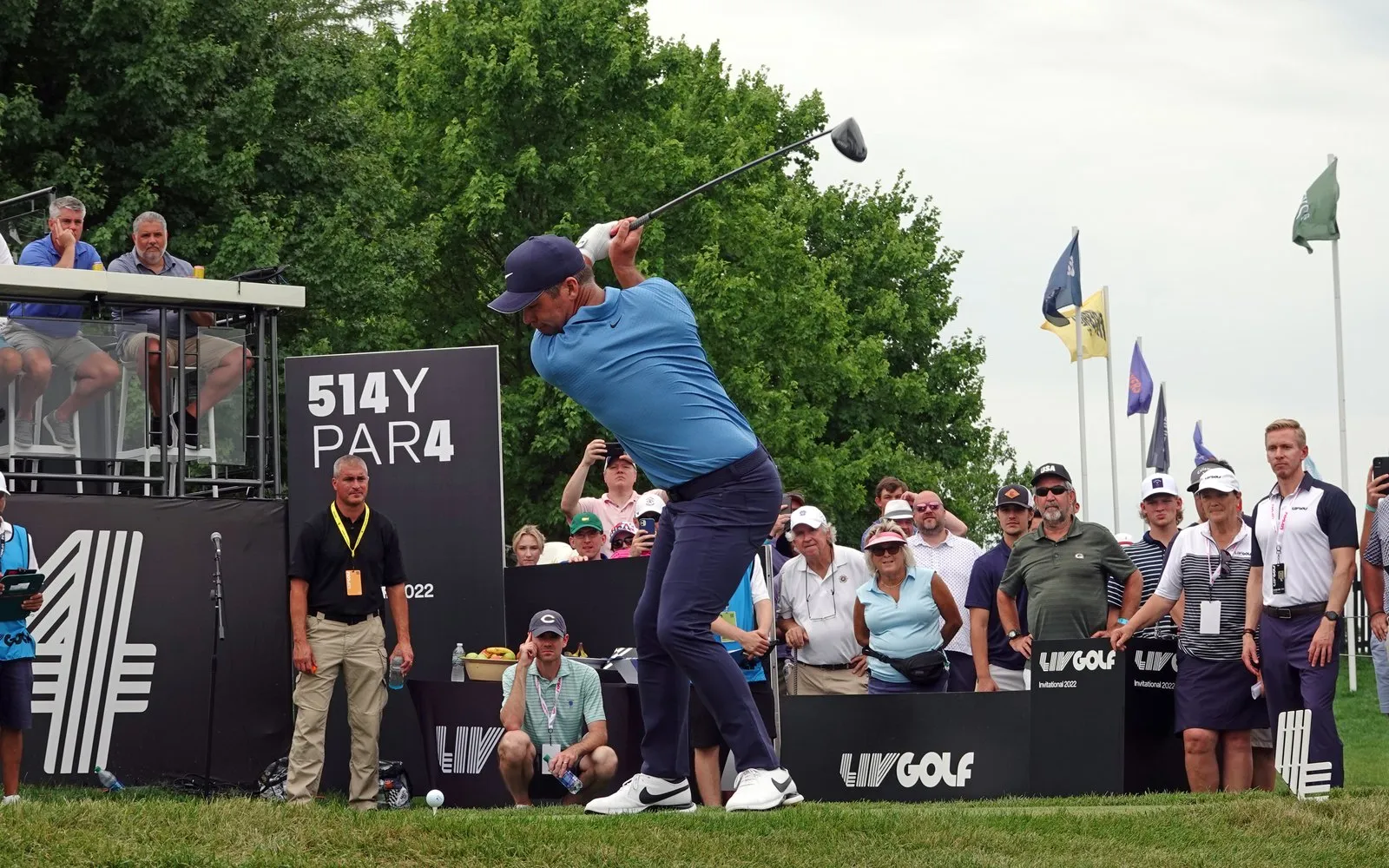
In October 2021 LIV Golf set out to reorder professional golf, funded by Saudi Arabia’s sovereign wealth fund, the PIF. Almost five years, more than five billion dollars and two major wins later, the league filed for Chapter 11 protection under US bankruptcy law on 8 September 2026. A failure? For the funder, certainly. For many players, hardly. And the PGA Tour is a different organisation today than it was before LIV. The story in five acts, a balance sheet from four perspectives, and the question of what golf brands, clubs and event organisers can learn from it.
LIV Golf in numbers
| Metric | Value |
|---|---|
| Founded | 29 October 2021 |
| First event | 9 to 11 June 2022, Centurion Club near London |
| Spending by the sovereign wealth fund PIF | 5.3 billion dollars by February 2026 (newsletter Money in Sport) |
| Sponsorship revenue 2025 | 102 million dollars, roughly half of total revenue (bankruptcy filings) |
| Viewers on the Fox main network 2025 | 338,000 per broadcast, 385,000 for final rounds. PGA Tour final rounds: 2.66 million |
| Major wins by LIV players | 2 (Brooks Koepka 2023, Bryson DeChambeau 2024) |
| Bankruptcy filing | 8 September 2026, liabilities of 500 million to 1 billion dollars |
Act 1: The founding
On 29 October 2021 LIV Golf Investments introduced itself, with Greg Norman as chief executive and the PIF as majority owner. The name is the Roman numeral 54: the score a player would shoot with a birdie on every hole of a par-72 course, and also the number of holes per event.
The format broke with almost everything that defined professional golf. 48 players in twelve teams of four, 54 instead of 72 holes, no cut, everyone starting at the same time. Each regular event carried a purse of 25 million dollars, 20 million for the individual competition and 5 million for the teams. At the first event in June 2022 at the Centurion Club north of London, Charl Schwartzel won 4.75 million dollars. That was more than a major victory paid in 2022.
Phil Mickelson, who became the face of the early days, had described the motivation to his biographer at the end of 2021. The conversation became public in February 2022: for him it was a once-in-a-lifetime opportunity to change the way the PGA Tour operates.
Act 2: Money for stars
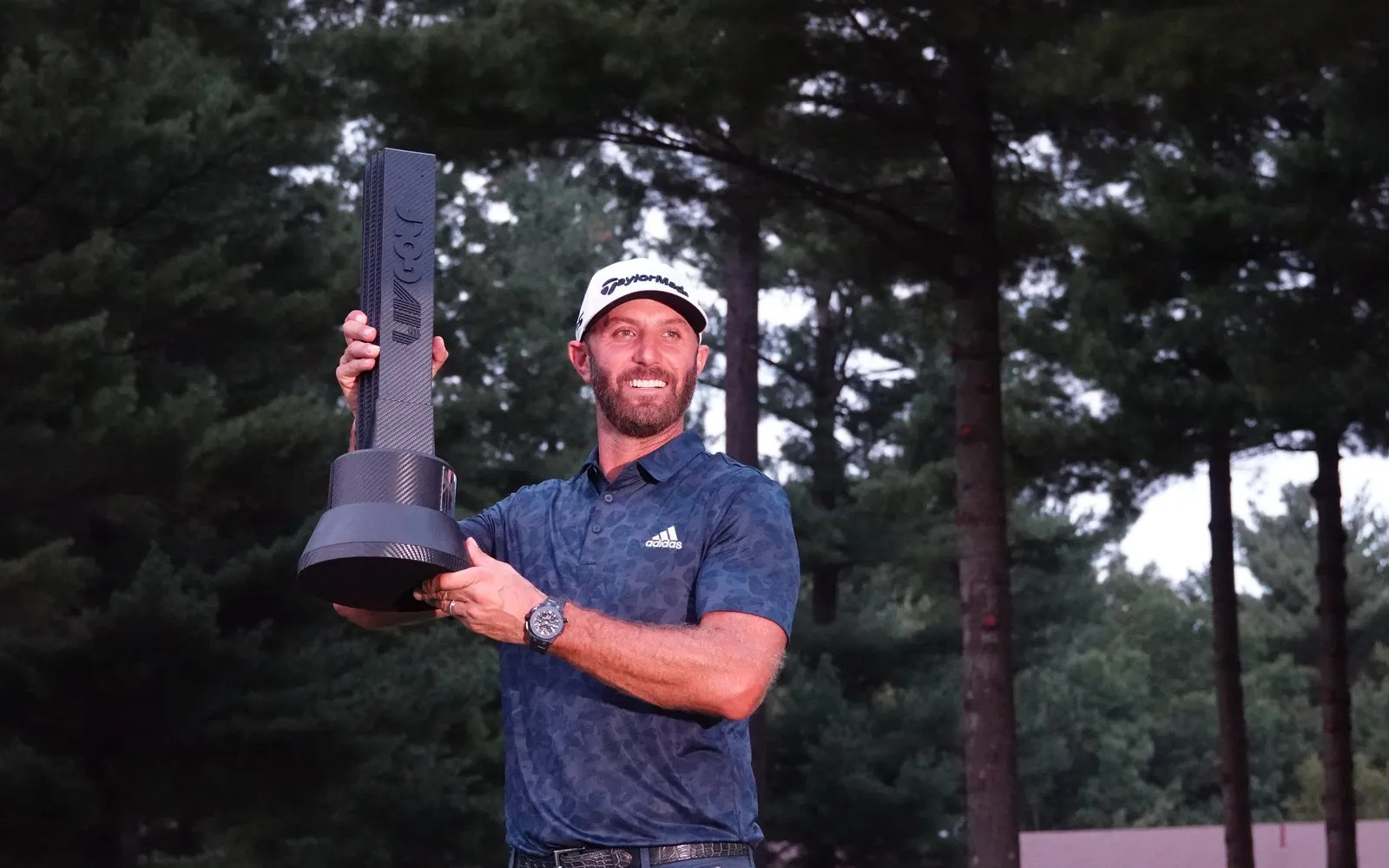
LIV bought what a new competition needs most urgently: famous names. The sums have never been officially confirmed. According to media reports Mickelson received around 200 million dollars, Dustin Johnson around 125 million, Bryson DeChambeau also around 125 million, by his own account even more. Brooks Koepka is said to have been guaranteed around 100 million, Cameron Smith at least 100 million in August 2022. The biggest contract was signed by Jon Rahm in December 2023, with estimates between 300 and around 566 million dollars. To lure stars such as DeChambeau, Mickelson, Koepka and Johnson away from the PGA Tour, LIV spent around one billion dollars according to AP.
Just as revealing is who did not come. Greg Norman initially put an offer to Tiger Woods at 700 to 800 million dollars. Shortly afterwards he clarified that this included the future value of a team and that Woods was never offered that much money. Woods himself has never confirmed the sum. Rory McIlroy said he was never quoted a figure and never considered a move.
Act 3: War, peace plan, stalemate
The PGA Tour hit back hard. On 9 June 2022 it suspended 17 players, the DP World Tour imposed fines of 100,000 pounds each and playing bans, which an arbitration panel upheld in April 2023. Players and later LIV itself sued in the US on antitrust grounds. PGA Tour commissioner Jay Monahan asked on television the question that captured the mood of the time: “Have you ever had to apologise for being a member of the PGA Tour?”
At the same time the Tour was building up its own arsenal. In August 2022 it announced elevated events with average prize money of 20 million dollars and a 100 million dollar bonus pool for its most popular players. Total prize money rose from 421.8 million dollars in the 2021/22 season to a planned 563 million in the following one.
Then came 6 June 2023. Without warning, the PGA Tour, the DP World Tour and the PIF announced a framework agreement for a joint company, and the lawsuits were withdrawn. Monahan told journalists that same evening: “I recognise that people are going to call me a hypocrite.” A hearing in the US Senate followed, as did a rejection from the world ranking: LIV players were good enough for a ranking but played in a format that could not be compared fairly with the other tours. The deadline for a definitive agreement at the end of 2023 passed.
The PGA Tour found its money elsewhere instead. In January 2024 the investor group Strategic Sports Group put 1.5 billion dollars into the newly founded PGA Tour Enterprises at a valuation of more than 12 billion. Players received equity worth 930 million dollars. Meetings at the White House in February 2025 brought no breakthrough. In June 2025 the Tour appointed Brian Rolapp as CEO, and he took office in the summer. Talks were stuck, above all on the team concept and on whether LIV would continue as a league of its own. Adam Scott summed it up in January 2026: “I’d say they’re irreconcilable at the moment.”
Act 4: Elite sport without an audience
On the course, LIV delivered. Koepka won the 2023 PGA Championship, DeChambeau the 2024 US Open. Commercially it did not. The first television deal with US network The CW in 2023 brought no rights fee, only a share of revenue. In 2025 LIV moved to Fox. On the network’s main channel an average of 338,000 people watched, 385,000 for final rounds. The PGA Tour’s final rounds drew 2.66 million, around seven times as many.
The accounts of LIV’s British company, which covers the business outside the US, show the imbalance: by the end of 2024 losses had accumulated to more than 1.1 billion dollars, on revenue of around 65 million in 2024. For the league as a whole, the bankruptcy filings put sponsorship revenue at 102 million dollars in 2025, roughly half of total revenue.
In January 2025 Scott O’Neil replaced Greg Norman as chief executive. For the 2026 season LIV switched to 72 holes and raised prize money to 30 million dollars per event. In February 2026 the world ranking awarded points for the first time, but only to the top ten of each event.
Act 5: The collapse
In mid-April 2026 the sovereign wealth fund presented its strategy for 2026 to 2030. LIV did not appear in it. O’Neil assured staff: “Our season continues exactly as planned, without interruption and at full throttle.” Two weeks later it was over. On 29 April the Wall Street Journal reported, and on 30 April the PIF confirmed: funding ends with the 2026 season. The reasoning: the long-term investment required no longer fitted the current phase of its investment strategy. From June the fund financed the rest of the season only through a secured loan of 495 million dollars.
After that it went quickly. The New Orleans event was postponed and never rescheduled, suppliers sued over unpaid invoices. In July the Asian Tour, which LIV had supported with 300 million dollars, joined forces with the PGA Tour and the DP World Tour. That threatens to close LIV’s route into the world ranking. On 17 August the team championship was cancelled, and at the finale in Indianapolis the individual purse was halved to 10.1 million dollars. Several players were still waiting for prize money from the previous event. A few days after the finale around 90 percent of staff lost their jobs.
On 8 September 2026 LIV filed for bankruptcy protection in New Jersey. Around 15 million dollars remained in the bank. Liabilities stand between 500 million and one billion dollars, with more than 1,000 creditors. Among the 30 largest unsecured creditors are 14 players: Jon Rahm with 7.47 million dollars, Bryson DeChambeau with 5.77 million, Dustin Johnson with 5.49 million. Even the state of Louisiana is waiting for money.
LIV has not given up, though. With the bankruptcy filing the league presented an agreement with investor BC Partners Credit, and on 5 October a revised version: up to 300 million dollars in funding, a new league owned 52.5 percent by the players, 45 percent by the investors and 2.5 percent by management, and for 2027 ten events with 75 players and, for the first time, a cut. On 14 October Judge Michael B. Kaplan approved that agreement and, at LIV’s request, the rejection of the existing contracts of 19 players, among them DeChambeau, Dustin Johnson and Cameron Smith. Since then they have been free: they can sign with “LIV 2.0” on new terms or play elsewhere. Players must decide by 25 October; the investor judges whether enough have committed. By the end of October LIV wants to know whether the new league launches or the old one is wound down. Meanwhile the DP World Tour has announced that it will exclude players of the new league from 2027. The judge called that concerning; LIV’s lawyer called it an attempt to interfere in the process with the players.
Who left and who came back
Those who joined LIV between 2022 and 2023 include Mickelson, Johnson, DeChambeau, Koepka, Smith and Rahm. The most prominent returnee is Brooks Koepka. He left LIV at the end of December 2025 and returned to the PGA Tour in January 2026 through a one-off returning member programme, on hard terms: five million dollars to charity, no bonus from the 2026 FedExCup standings and no equity for five years, which the Tour valued at 50 to 85 million dollars. DeChambeau, Rahm and Smith could have used the programme as well but declined. Patrick Reed left LIV at the end of January 2026 without that programme and was allowed to play on the PGA Tour again from late August.
There is to be no second returning member programme. “We are not currently considering a returning member programme like the one in January,” Rolapp said in mid-September. “Rules matter, and they have to be enforced.”
Since the bankruptcy filing the contracts have been unravelling. Sergio Garcia obtained a court release from his contract in early October. On 7 October Jon Rahm had his lawyer declare that the new league’s terms were unacceptable to him, and a week later agreed a separation with LIV: he waives all outstanding claims, a nine-figure sum from his late-2023 contract according to Golf Digest, and in return gets back the rights to his name and to the team name Legion XIII. The court must approve in November. Rahm has kept his DP World Tour membership. Louis Oosthuizen announced on 21 October that he will play on the DP World Tour in 2027. Adrian Meronk, David Puig, Charles Howell III, Thomas Pieters and Abraham Ancer have also left, and Joaquin Niemann is considering it according to Golf Digest. Four days before the deadline only four players had publicly committed to the new league: Richard Bland, Cameron Tringale, Brendan Steele and Ben Campbell.
DeChambeau, whose contract the court also rejected, is working behind the scenes on the new league according to ESPN. As of 23 October he had not committed publicly. He named his alternative in May: he would like to triple his YouTube channel. There is no comfortable way back. According to Golf Digest the PGA Tour will only talk to players once they prove they are out of their LIV contracts.
Success or failure? Four balance sheets
Whether LIV failed depends on whose balance sheet you read.
| From the perspective of | What argues for success | What argues for failure |
|---|---|---|
| The funder, PIF | Global attention, negotiations on equal terms with the PGA Tour | More than five billion dollars spent, no deal, bankruptcy |
| Players | Nine-figure guarantees that did not depend on results | Millions in unpaid claims, restricted world ranking points |
| PGA Tour | Higher prize money, new investors, players as co-owners | Years of division, stars missing from its events, high costs |
| Fans | More movement, new formats, team competition | The best players together only four times a year |
For the players who signed early, LIV was probably the best deal of their careers. For the PIF it was an expensive experiment. And the PGA Tour, under pressure, implemented reforms it would probably not have tackled so quickly on its own. I leave the answer to the question in the title to you.
What the golf industry can learn
1. Money buys supply, not demand
LIV had the stars, the events and the prize money. What it lacked was a reason for fans to tune in regularly: rankings that mattered, rivalries that had grown over time, habit. The same applies on a smaller scale. A golf brand can buy reach, a club can build a new clubhouse. Whether that turns into demand depends on the question of why anyone should come back.
2. Whoever lives off one funder lives on borrowed time
According to the bankruptcy filings LIV earned 102 million dollars from sponsorship in 2025, roughly half of its revenue. According to The Athletic the league spent more than 100 million dollars a month. When the one funder pulled out, there was nothing to fall back on. The industry knows the pattern from the Good Good case as well: whoever depends on a few partners falls with them. For brands that rely heavily on one retailer or one advertising channel, and for clubs that live off a few major sponsors, it is the same question.
3. A new format needs a place in the existing system
LIV fought the world ranking for a long time because its format could not be compared. Without comparison, results lose their meaning. Whoever creates a new category, whether a new membership model, a new tournament format or a new product, has to explain where it fits into the familiar, or invest a great deal of time and money in that explanation. Even O’Neil expected it to take five to ten years to reach profitability.
4. The challenger changes the incumbent
The PGA Tour of 2026 has higher prize money, outside investors and players as co-owners. To a large extent that is LIV’s doing. Established golf clubs are experiencing the same with the Vereinigung clubfreier Golfspieler, Germany’s association for golfers without a club, with Topgolf and with public golf: new providers do not have to win to change the market.
5. If you want to keep partners, make them owners
The PGA Tour has allocated equity worth 930 million dollars to its players, and the new LIV league is to be majority-owned by the players. Both sides have learned that money alone does not buy loyalty; a stake in the business comes closer. The same holds on a smaller scale. A club in which members help shape things keeps them longer. A brand that gives creators, pros or retailers a share in its success, rather than merely paying them, has partners who stay in difficult times too.
The questions that remain
Will the relationship with fans belong to the tours, the players or the creators on YouTube in future? Can a competition owned by the players work better commercially than one owned by a sovereign wealth fund? And does golf need a single big tour, or does it live better with several formats? The answers will help decide where sponsors, brands and media budgets in golf flow over the next few years.
Frequently asked questions
Is LIV Golf bankrupt?
LIV Golf could no longer pay its suppliers and players in full and filed for Chapter 11 protection under US bankruptcy law on 8 September 2026. That is a restructuring procedure, not a liquidation. On 14 October 2026 the court approved the agreement with investor BC Partners Credit and the rejection of 19 player contracts. Ten events are planned for 2027. LIV wants to decide by the end of October whether the new league goes ahead.
Who funded LIV Golf?
Saudi Arabia’s sovereign wealth fund, the PIF. By February 2026 it had put around 5.3 billion dollars into LIV, according to the newsletter Money in Sport. The funding ended with the 2026 season in August. In the bankruptcy proceedings the PIF is now only a lender.
Which players have returned from LIV to the PGA Tour?
Brooks Koepka returned in January 2026 through a one-off returning member programme and, among other conditions, paid five million dollars to charity. Patrick Reed left LIV at the end of January 2026 and was allowed to play on the PGA Tour again from late August. Jon Rahm parted ways with LIV in October 2026 and waived his outstanding claims. Where he will play in 2027 is open; he has kept his DP World Tour membership.
What does the name LIV mean?
LIV is the Roman numeral for 54. That was the original number of holes in a LIV event, and 54 is the score a player would shoot with a birdie on every hole of a par-72 course.
Sources
As of 23 October 2026. The bankruptcy proceedings are ongoing; player contract values are media reports and are marked as such in the text.
- PR Newswire: Greg Norman Named CEO Of LIV Golf Investments, 29 Oct 2021
- Golf Monthly: What does LIV stand for?, 27 Jul 2022
- GolfMagic: Charl Schwartzel wins 4.75 million dollars, 11 Jun 2022
- The Boston Globe: Phil Mickelson rips PGA Tour again, 17 Feb 2022
- Golf Monthly: What Do LIV Golfers Get Paid?, 10 Jun 2022
- Yahoo Sports via AOL: Bryson DeChambeau said he was paid more than 125 million dollars to join LIV Golf
- Golf Monthly: How Much Did LIV Golf Pay Jon Rahm?, 8 Dec 2023
- NPR: Greg Norman says Tiger Woods turned down a 700 to 800 million dollar offer, 2 Aug 2022
- Golf.com: Greg Norman clarifies LIV offer to Tiger Woods, 20 Aug 2022
- Golf Digest: Rory McIlroy squashes LIV Golf rumors, 16 Apr 2024
- Sky Sports: Players suspended from the PGA Tour over LIV involvement, 10 Jun 2022
- AP via The Boston Globe: European tour wins ruling against LIV Golf, 6 Apr 2023
- CBS Sports: Jay Monahan addresses LIV Golf, 12 Jun 2022
- Golf Channel: PGA Tour announces sweeping changes, 24 Aug 2022
- Golf Digest: The increases in professional golf’s prize money and purses are staggering, 28 Feb 2023
- PGA Tour: PGA Tour, DP World Tour and PIF announce newly formed commercial entity to unify golf, 6 Jun 2023
- Golf.com: Jay Monahan defends PGA Tour-LIV merger, 6 Jun 2023
- Fortune/Bloomberg: Senate’s golf probe, 11 Jul 2023
- Golf Digest: LIV Golf denied World Ranking points, 10 Oct 2023
- Golf.com: Tiger Woods tells peers PGA Tour-SSG deal is sports history, 31 Jan 2024
- Golf Channel: PGA Tour rejects recent 1.5 billion dollar PIF offer, according to reports, 4 Apr 2025
- AP via News4JAX: Jay Monahan to leave next year as PGA Tour turns to NFL exec Brian Rolapp, 17 Jun 2025
- Golf.com: Rory McIlroy, Adam Scott provide bleak update on PGA-LIV talks, 22 Jan 2026
- Golf Digest: LIV Golf secures U.S. TV deal with The CW Network, 19 Jan 2023
- Awful Announcing: Season-long viewership spells disaster for LIV Golf compared to PGA Tour, 6 Oct 2025
- Front Office Sports: LIV Golf Lost 461 Million Dollars in Non-U.S. Operations in 2024, 3 Oct 2025
- Golf Digest: Greg Norman officially out as LIV Golf CEO, 15 Jan 2025
- AP via NBC Boston: LIV Golf increases total purse to 30 million dollars for 2026, 14 Jan 2026
- AP via News4JAX: LIV Golf to get world ranking points for the first time, 3 Feb 2026
- PGA Tour: Brooks Koepka and the Returning Member Program, 12 Jan 2026
- Golf Digest: Patrick Reed and others leave LIV Golf, seek reinstatement with PGA Tour, 28 Jan 2026
- Front Office Sports: Saudi PIF Will Have Spent More Than 6 Billion Dollars on LIV Golf by 2027, 23 Feb 2026
- Sky Sports: LIV Golf CEO Scott O’Neil says season will continue full throttle, 16 Apr 2026
- Golf.com: PIF statement, LIV Golf no longer consistent with investment strategy, 30 Apr 2026
- AP via The Boston Globe: LIV Golf has a new chairman and seeks new funding without Saudi backing, 30 Apr 2026
- Golf Digest: DeChambeau says he will focus on YouTube if LIV Golf ends, 6 May 2026
- Golf Digest: LIV Golf CEO deflects question on upcoming events, 9 Jun 2026
- Reuters via Daily Maverick: PGA Tour and DP World Tour announce partnership with Asian Tour, 21 Jul 2026
- Golf Channel: LIV Golf officially cancels Michigan event, 17 Aug 2026
- Golf Digest: LIV Golf slashes payouts amid reports of players not getting paid, 18 Aug 2026
- Telegraph via Yahoo: LIV Golf lays off 90 per cent of staff, 26 Aug 2026
- AP via NBC Sports Boston: LIV Golf files for bankruptcy protection, 8 Sep 2026
- Golf.com: LIV Golf files for bankruptcy, what we know, 8 Sep 2026
- Golfweek via Yahoo: To whom does LIV Golf owe money?, 8 Sep 2026
- Golf.com: 9 revealing findings inside LIV’s bankruptcy filings, 9 Sep 2026
- The Spokesman-Review/The Athletic: The decline of LIV Golf, 11 Sep 2026
- OutKick: Rolapp reiterates no returning member program, 15 Sep 2026
- Golf Channel: LIV Golf and BC Partners file restructuring support agreement, 5 Oct 2026
- Golf.com: LIV Golf’s latest bankruptcy filings call for two significant changes, 6 Oct 2026
- Golf Digest: Sergio Garcia let out of LIV Golf contract, but Jon Rahm’s deal remains in limbo, 6 Oct 2026
- Golf Digest: LIV Golf player commitment deadline delayed, 300 million dollar financing, 5 Oct 2026
- Front Office Sports: LIV readies for next phase of bankruptcy as court proceedings ramp up, 5 Oct 2026
- Golf Monthly: Jon Rahm to leave LIV Golf after three years, 7 Oct 2026
- NBC Sports: Jon Rahm will not return to LIV Golf due to unacceptable proposal terms, 7 Oct 2026
- Golf.com: LIV Golf’s latest bankruptcy hearing offers key future timeline, raises concerns, 14 Oct 2026
- AP via Yahoo Sports: Judge approves agreement between LIV Golf and BC Partners, 14 Oct 2026
- Golf Digest: Jon Rahm reaches separation agreement with LIV Golf, surrenders rest of contract, 15 Oct 2026
- Golf Digest: Another major champ leaves LIV Golf, just four players publicly committed days before deadline, 21 Oct 2026
About the author
Claudio Lohs
MBA. 20+ years in the golf industry as a player, club president and strategist. 12+ years of marketing expertise in brand management and e-commerce. I work for you. For nobody else.
Book a tee time